Industrial safety · Smart India Hackathon 2026 · team of sixSuraksha Saathi
An Android app that runs fire and gas-leak drills over the live camera, scores what the worker does, and issues a certificate anyone can verify offline.
- Role
- Technical lead: architecture, Android app, scoring engine, certificates, back end, deployment
- Team
- Caffeine Coders: me, Shivam Suthar (team lead), Jeet Prajapati (dashboard), Apurva Prajapati (safety content), Zarna Modhia (Hindi and Santali), Hetvi Vyas (UI/UX)
- Duration
- 12 days, September 2026
- Stack
- Expo React Native, TypeScript, SQLite · FastAPI, PostgreSQL · React, Tailwind, Recharts · Ed25519
- Status
- Working prototype: a v1.0.0 APK for Android 10 and up
- Tests
- 779 across the app, API and dashboard, run in CI on every push
The problem
DGMS recorded 48 fatal mine accidents in Jharkhand in 2022–23, many involving workers in their first month. New workers learn safety from manuals in a classroom and keep little of it a week later. Live drills stop production, VR headsets are out of reach for small mines and contractors, and a paper certificate can’t show that a worker knows what to do.
What it does
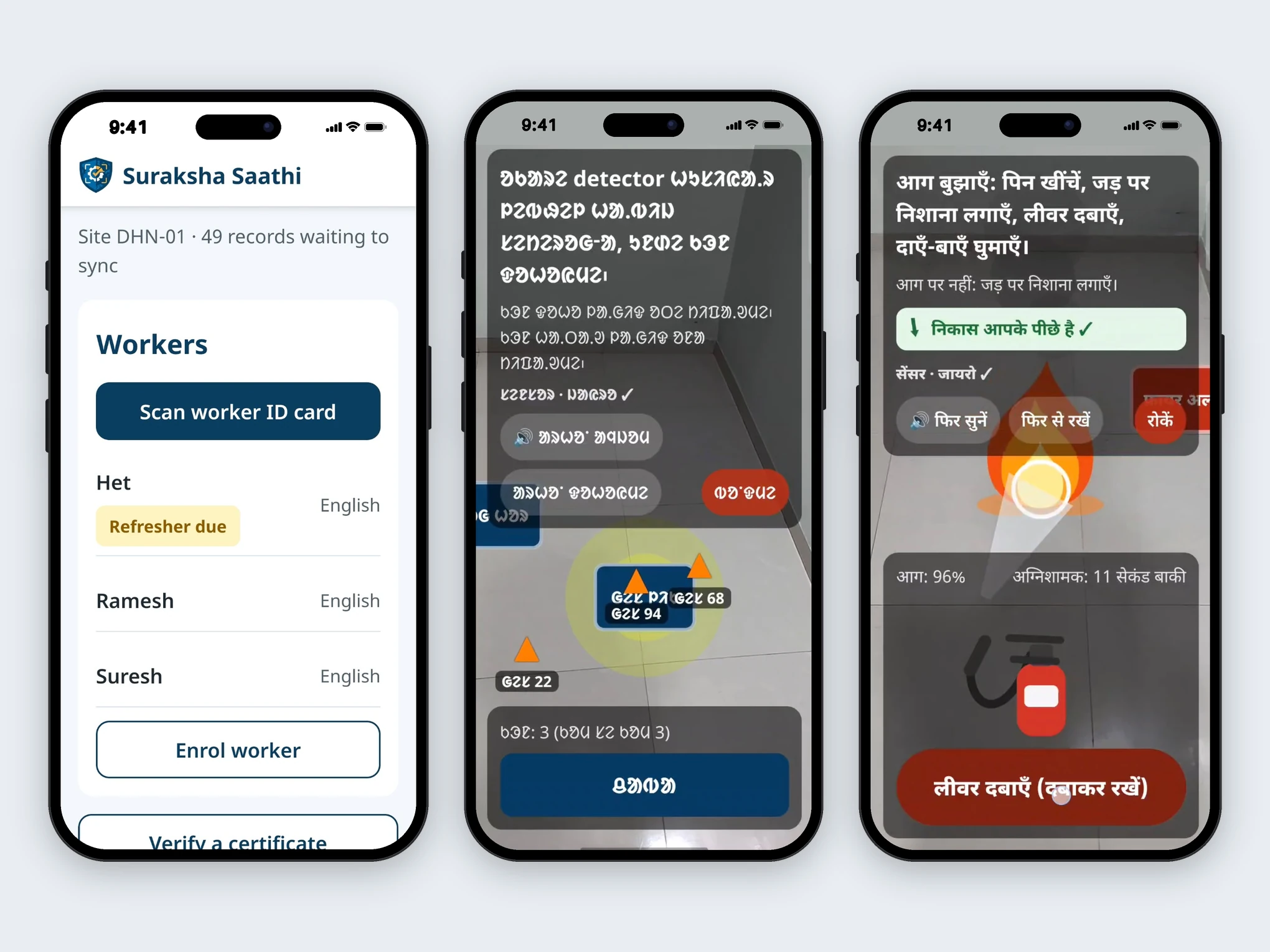
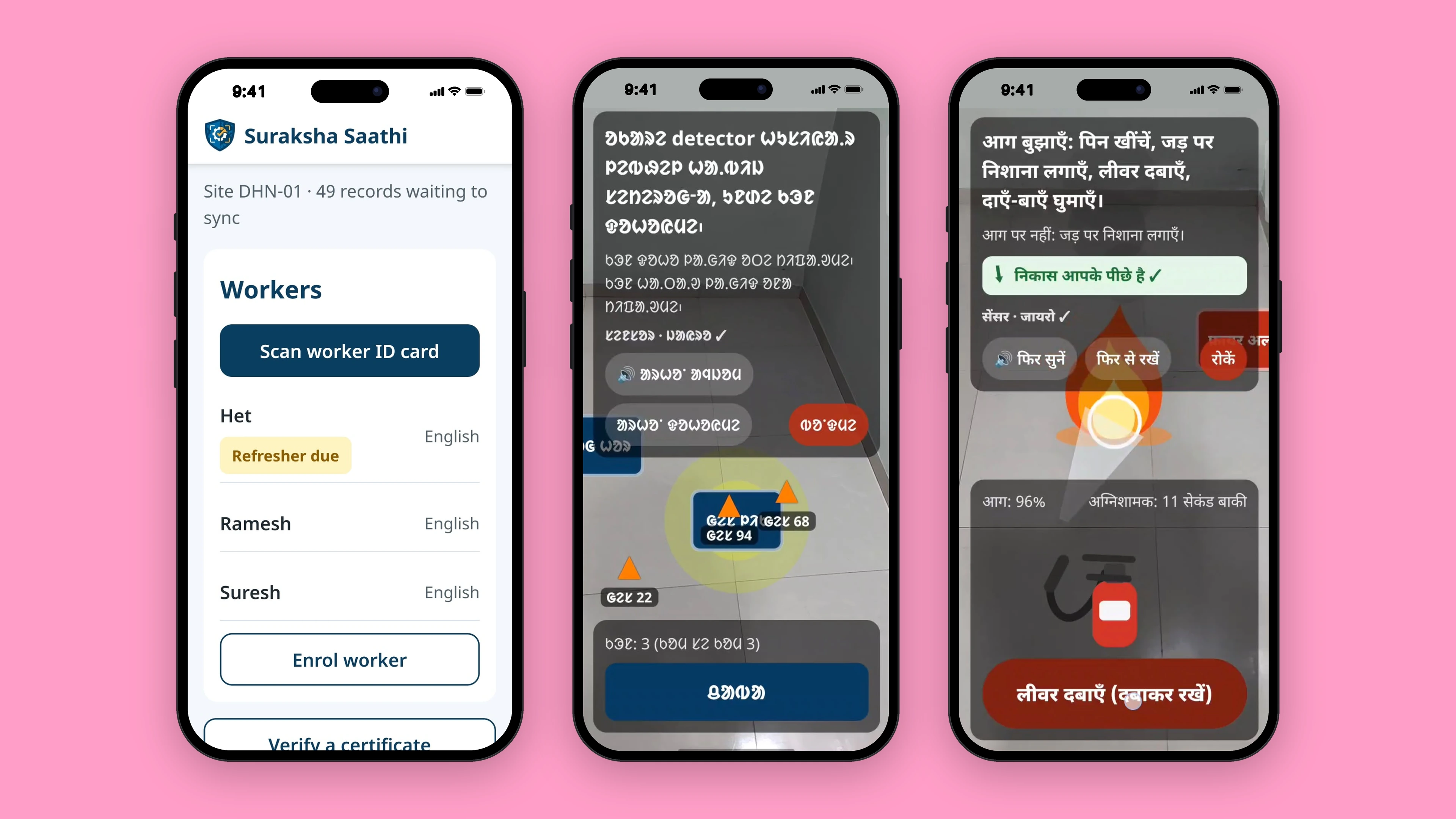
- Two complete drills, fire and explosion, and gas leak and confined space, drawn over the live camera on the worker’s real floor, or in a drawn room when there’s no camera.
- The PASS extinguisher technique done by hand: drag out the pin, aim at the base, hold the lever and sweep, while the fire grows, shrinks or flares up with what you do.
- Scoring on actions, not quiz answers: nine rules per drill, 70% to pass, and a missed critical step fails the attempt whatever the score. The result screen explains every lost point, out loud.
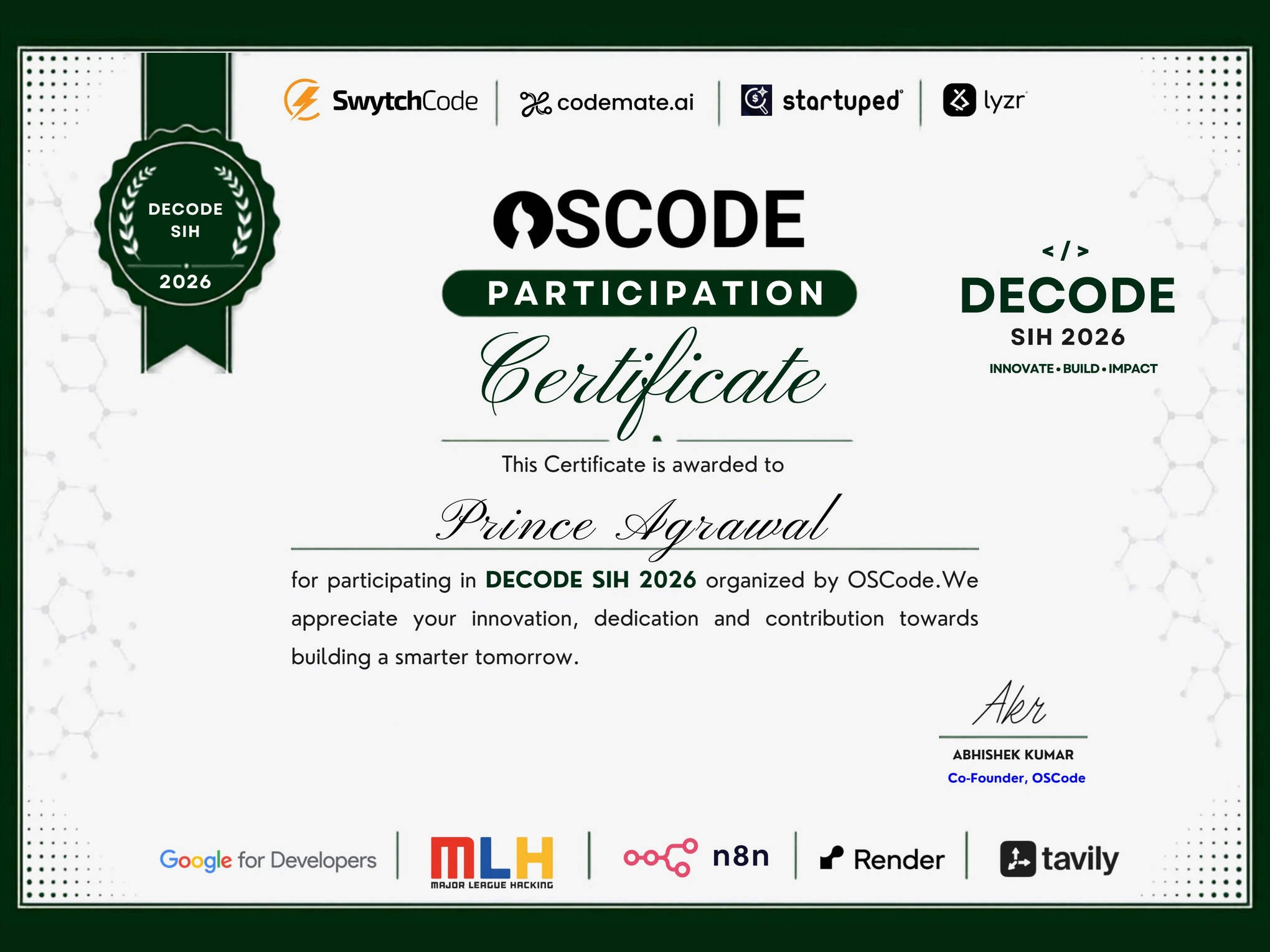
- A signed QR certificate issued on the phone with no network, which the app or a web page verifies offline, and refresher drills due on day 7 and day 30.
- Every screen in English, Hindi and Santali (Ol Chiki script), with spoken instructions, and a compliance dashboard for supervisors.
How it’s built
An Expo React Native app in TypeScript, a FastAPI back end on PostgreSQL, and a React dashboard. Each drill is a JSON file of steps and scoring rules played by one generic scenario player, so a new safety domain needs content, not code. Scoring is a pure function over a timestamped log of what the worker did, unit-tested in Node. Certificates use a two-level Ed25519 chain (root key, device attestation, certificate), so a phone can issue one and a stranger can check it with no network; the app, API and dashboard all pass the same test vectors. A gyroscope filter holds the overlays steady, and printed QR markers pin them to the real exit.
My role
I was the technical lead and built the system: the architecture, the Android app, the camera drills and scenario player, the scoring engine, the offline certificates, the back end and the deployment. When Unity’s Android tools wouldn’t install, I moved the app to Expo React Native and kept the scenario files, scoring and certificate formats as they were. Shivam led the team and the pitch, Jeet built dashboard screens and tested, Apurva researched the safety procedures, Zarna wrote the Hindi and Santali, and Hetvi designed the interface and wallet cards.
Outcome
An installable APK that runs on any Android 10 phone with no headset. Cleared the MSU Baroda internal round of Smart India Hackathon 2026; the prototype is under SIH review. Next: syncing phones to the dashboard, and native-speaker review of the Santali.